The first time you roll into a skatepark can feel like walking into a party where everyone knows each other. People are moving in every direction, nobody is directing traffic, and somehow they are not crashing into each other. That is because skateparks run on a set of unwritten rules that regulars absorbed years ago.
None of those rules are complicated, and almost all of them come down to the same idea: share the space and stay out of other people’s way. Learn them before your first session and you will be safer, you will progress faster, and the locals will be far more likely to give you tips than dirty looks.
Key takeaways
- Watch the flow for a few minutes before you drop in, and learn the park’s lines.
- Take turns: one skater per line, and do not snake someone who was waiting.
- Never sit, stand or leave your board in a landing or on the coping.
- Go early in the morning or on weekday afternoons to learn without crowds.
- Wear a helmet, say hi and cheer other people’s tricks; that is how you become a local.
1. Watch before you skate
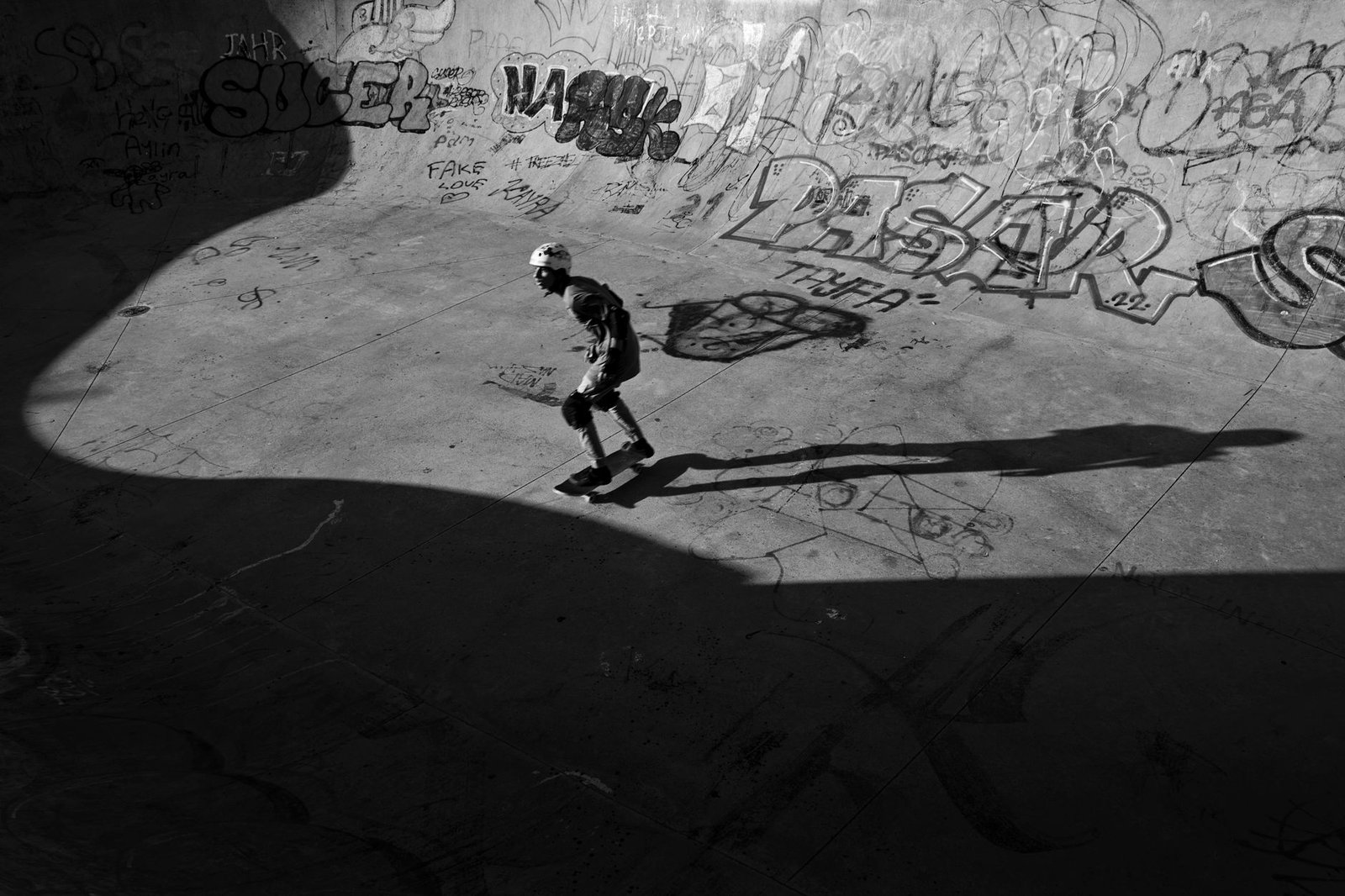
Spend your first five minutes standing at the edge, not on your board. Every park has a flow: lines that skaters repeat, directions people tend to travel, features that get busy and corners that stay quiet. Watching tells you where the bowl riders go, which ledge the street skaters are lining up for, and where a beginner can practice without getting in anyone’s way.
Pay attention to where people land. Those spots are the most dangerous places to be standing, and they are not always obvious from the entrance.
2. Take turns, and learn the snake rule
At a busy park, skaters take turns. On a bowl or mini ramp that usually means people wait on the deck, and whoever has been waiting longest goes next. On a street course it is looser, but the principle is the same: one person per line at a time.
“Snaking” is dropping in or starting your run when someone else was clearly next. It is the classic beginner mistake, and the one regulars notice most. If you are not sure whose turn it is, make eye contact, nod or simply ask. A quick “you going?” solves most problems.
3. Do not stand, sit or park in the way
Never sit on the coping of a ramp, stand at the bottom of a drop-in or leave your board lying in a landing zone. When you fall, grab your board and get out of the line straight away, then check yourself for injuries once you are clear. A board rolling loose across the park is a hazard; if yours gets away, yell “board!” so people look up.
The same goes for phones and bags. Put them at the edge of the park, not on a ledge someone might skate.
4. Pick the right time and the right spot
If you are just learning to push, turn and stop, a packed Saturday afternoon is not the place to do it on the main bowl. Early mornings and weekday afternoons are usually quieter, giving you room to fall without pressure.
When the park is busy, stick to flat areas, small quarter pipes and the edges. As you improve, move onto bigger features at quieter times first. Regulars appreciate a beginner who reads the room.
5. Make your intentions predictable
The danger at a skatepark is rarely the trick itself; it is two people heading for the same spot. Ride in a predictable line, avoid sudden direction changes, and do not cut across the middle of a run that is already in progress. If you are about to drop in, put your tail on the coping and wait a beat so people can see you are going.
6. Wear the gear and own it
A helmet at the skatepark is not uncool; it is standard, and in many public parks it is required by the posted rules. A certified skate helmet such as the one in our Triple Eight Sweatsaver review is the most important thing to bring. Wrist guards and knee pads make sense while you are learning, especially on ramps. Nobody serious will judge you for protecting yourself; they will judge you for getting in the way.
7. Bring a board that works
A toy board with plastic trucks makes everything harder, from rolling smoothly to turning out of the way of other skaters. Turn up on a real skate-brand complete with a sensible width and hard wheels made for parks. If you have not bought one yet, our guide to choosing your first skateboard covers widths, wheels and completes, and our CCS complete review looks at a solid starter option.
8. Respect the space and the locals
Many skateparks exist because local skaters campaigned and fundraised for them, and some were built or maintained by skaters themselves. Treat the park accordingly: take your trash with you, do not wax features you do not skate, and keep the noise of speakers reasonable. Younger kids are often there with parents; watch your language when they are around.
If you want to know more about why public skate spots matter, read our piece on building community through public spaces.
9. Be friendly, and cheer people on
Skateboarding has a strong tradition of encouragement. When someone lands a trick they have been trying all session, people bang their boards on the coping or the ground. Join in. Say hi to the people you see regularly, and do not be shy about asking a regular how to approach a feature. Most skaters enjoy explaining things to someone who is clearly trying.
What not to do: film other people without asking, give unsolicited advice to someone who did not ask, or treat the park like a stage. Confidence is fine; showing off at the expense of other people’s sessions is not.
10. Know when to call it
Fatigue causes a lot of falls. When your legs start to feel heavy and your tricks get sloppier, take a break or end the session on something you can land. Drink water, especially on hot days on concrete. If you take a hard fall, particularly to the head, stop for the day.
The short version
Watch first, take your turn, keep landings clear, wear a helmet and be friendly. Do those five things and you will fit in at almost any skatepark in the world. The rest, from learning lines to picking up the local slang, comes naturally the more often you show up.
Frequently asked questions
What does snaking mean at a skatepark?
Snaking is dropping in or starting a line when someone else was clearly next, or cutting across their run. It is the most common way beginners annoy regulars. If you are not sure whose turn it is, make eye contact and ask.
Is it OK to be a beginner at a busy skatepark?
Yes. Everyone at the park was a beginner once, and most skaters are happy to see new people. Just stick to the quieter flat areas or smaller ramps at busy times, and save practice on the main features for quieter hours.
Do I need a helmet at the skatepark?
Many public parks post rules requiring helmets, especially for minors, and some enforce them. Even where they are optional, a certified skate helmet is the single best piece of protection for a beginner. Our Triple Eight helmet review explains what to look for.
Can I bring a scooter or BMX to a skatepark?
It depends on the park. Some are shared, some have set times for bikes and scooters, and some are skateboard only. Check the posted rules, and follow the same turn-taking etiquette whatever you ride.