Loomz Sk8 is reader-supported. When you buy through links on our site, we may earn an affiliate commission at no extra cost to you. As an Amazon Associate we earn from qualifying purchases.
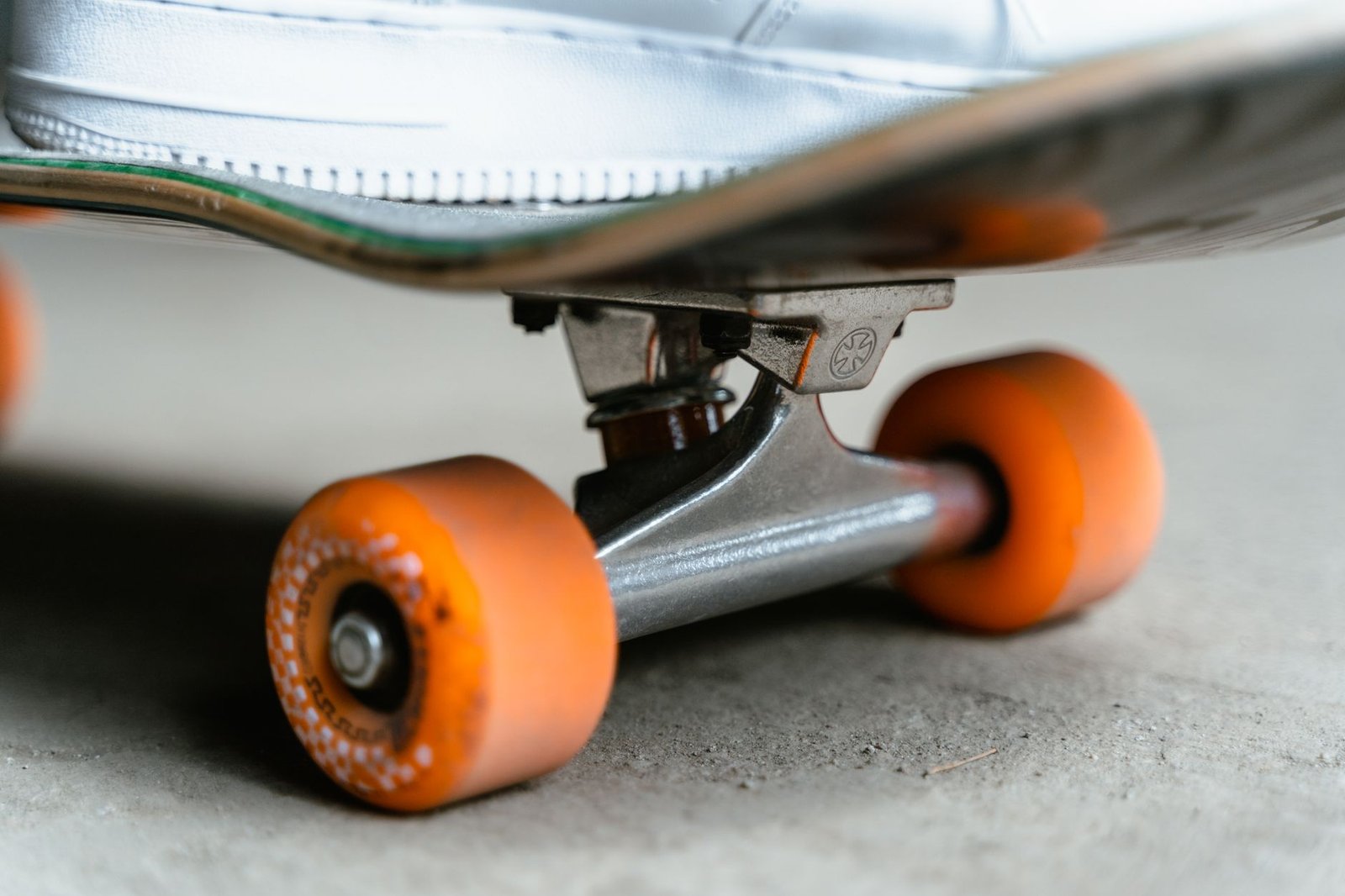
Most first skateboards are chosen by graphic. That is understandable: the graphic is the first thing you see, and it is the part that feels like yours. But the things that decide whether you actually learn to ollie, kickturn and drop in are less visible: what the deck is made of, how wide it is, how the trucks turn and how hard the wheels are.
This guide walks through those decisions in the order that matters. It is written for complete beginners and for parents buying a first board, and it assumes you want to learn real skateboarding, not just roll down the driveway once.
Key takeaways
- Buy a real maple popsicle from a skate brand; avoid plastic trucks and toy-store boards.
- Pick width by body and shoe size: around 8.0–8.5 in suits most teens and adults.
- For parks and smooth ground, choose hard 52–54mm wheels; for rough streets, go softer and bigger.
- A good complete is the best first board for most people; build custom once you know what you like.
- Budget for a helmet from day one, plus wrist guards while you learn to fall.
Starter setup shortlist
- 1
Best first complete
CCS Logo Complete Skateboard7-ply maple popsicle at 8.25 inches with 52mm 100A wheels, fully assembled, with nearly 2,000 ratings at 4.7 stars.
Read our review · Check price → - 2
For kids and small feet
Element Popsicle completeA narrower 7.75-inch deck and 51mm wheels for younger riders. Buyer feedback on trucks and durability is mixed, so treat it as a starter for kids, not a long-term board.
Check price → - 3
First wheel upgrade
Spitfire Formula Four 99a wheels (53mm)Spitfire’s flatspot-resistant Formula Four urethane in a park-and-street size. Buyers say they skate great and help with locking into grinds.
Check price → - 4
First bearing upgrade
Bones Reds bearingsThe default skate bearing, with more than 4,400 ratings. The pack includes a skate tool for swapping them in.
Check price → - 5
Non-negotiable
Triple Eight Certified Sweatsaver helmetCertified for skateboarding (ASTM F1492) as well as cycling, with two pad sets to fine-tune the fit.
Read our review · Check price →
Step one: skip the toy boards
The single biggest mistake is buying a board that is a toy dressed up as a skateboard. The warning signs are easy to spot once you know them: plastic or very lightweight trucks, a deck that does not mention maple, a narrow 28-inch shape for adults, and wheels described only as “PU” with no size or hardness. Those boards turn badly, lack pop and often break within weeks.
A real starter board uses a 7-ply maple deck in a popsicle shape (rounded nose and tail, both kicked up), aluminum or steel trucks and urethane wheels with a stated size and durometer. Skate brands and skate shops, such as CCS, Element, Baker or Santa Cruz, sell completes that meet that bar. Our review of the CCS complete looks at one of the best-rated examples in detail.
Step two: complete or custom?
A complete is a board sold fully assembled: deck, grip tape, trucks, wheels, bearings and hardware. A custom setup is one you build by picking each part.
For a first board, a complete from a skate brand is the right answer for most people. It is cheaper than buying the same parts separately, it arrives assembled correctly, and you do not need to know your preferences yet. The trade-off is that completes save money on the parts you cannot see, usually trucks, bushings and bearings.
Going custom makes sense once you have been skating for a few months and know what you like: a specific width, a truck brand that turns the way you want, or wheels for a particular park. Many skaters end up somewhere in between, starting with a complete and upgrading one part at a time as each wears out.
Step three: choose your deck width
Width is the most important number on a skateboard. Length barely varies on popsicle decks, which are generally 31 to 32 inches long, but width ranges from about 7.5 to 9 inches or more, and it changes how the board feels.
As a starting point:
| Rider | Suggested width |
|---|---|
| Young kids, small feet | 7.5–7.75 in |
| Teens and most adults | 8.0–8.25 in |
| Larger feet, transition and bowl skating | 8.375–8.5 in and up |
Narrower boards are lighter and flip more easily, which is why many street skaters like them. Wider boards feel more stable, give you more room to land, and suit ramps and bowls. When in doubt, a beginner should err slightly wider: stability helps more than flip speed in your first months.
Concave, the side-to-side curve of the deck, is the next detail. Medium concave is standard on most completes and is fine for learning. You will develop a preference later.
Step four: trucks
Trucks are the metal axles that let the board turn. On a complete they are already matched to the deck; if you build custom, choose a truck whose axle width is close to the deck width so the wheels sit roughly under the board’s edges.
Beginners mainly need to know about bushings, the urethane rings that control how easily the board turns. Tight bushings feel stable but resist turning; loose ones turn quickly but can feel twitchy at speed. You can adjust them with the kingpin nut and a skate tool, a quarter turn at a time. Pro-brand trucks such as Independent, Thunder or Venture are the usual upgrade once your complete’s trucks wear down.
Step five: wheels and bearings
Wheels have two numbers: diameter in millimeters and hardness on the durometer A scale.
- Diameter: 50–54mm is the classic street and park range; small wheels keep the board low and quick for tricks. 54–56mm suits transition and rougher ground. 56mm and up is cruiser territory.
- Hardness: 95A to 101A is hard, ideal for skateparks and smooth concrete because it slides predictably. 78A to 90A is soft, much smoother and quieter on rough asphalt but grippy for slides.
If you will mostly skate a park, hard wheels around 52 to 54mm are the right call. If your first board is mainly for getting around town, softer wheels make far more sense, and a cruiser may suit you better than a popsicle.
Bearings let the wheels spin. Ignore ABEC numbers on skateboard bearings: the ABEC scale measures industrial precision and says little about how a bearing handles side loads and grit. A known skate bearing brand matters more. Bones Reds are the usual first upgrade, and we cover them in our existing bearing review in the Skate Accessories section. Whatever you run, keep them out of puddles and clean them occasionally; our Bones clean and lube kit review explains how.
Step six: grip tape and the small stuff
Grip tape comes pre-applied on completes. Check it on arrival for big bubbles or missing areas; small bubbles can be pricked with a pin and pressed flat. A skate tool is worth having from day one to tighten trucks, wheels and hardware as things settle in.
Step seven: protection
Budget for a helmet from day one. A skate-specific helmet certified to ASTM F1492 is designed for the frequent, lower-speed falls skating produces. Our Triple Eight Sweatsaver review explains what that standard means and how to get the fit right. Wrist guards are also worth wearing while you learn, because putting a hand out is the natural reaction to a fall.
Once you have the board, your next step is the skatepark. Read our skatepark etiquette guide for beginners before your first session so you know how to share the space.
Frequently asked questions
What size skateboard should a beginner get?
For most teens and adults, a deck between 8.0 and 8.5 inches wide is the sweet spot. Younger kids and riders with small feet usually do better around 7.5 to 7.75 inches. Length matters much less; standard popsicle decks are about 31 to 32 inches long.
Is it better to buy a complete or build a custom skateboard?
For a first board, a good complete from a skate brand is usually the smarter buy: it is cheaper than buying parts separately and arrives set up correctly. Build a custom board once you know which width, trucks and wheels you prefer.
Are cheap skateboards from big-box stores OK?
Usually not for learning tricks. Many use soft plastic trucks, low-grade decks and wheels that grab, which make ollies and turning harder and can break quickly. A basic skate-brand complete is a far better starting point.
What wheels are best for beginners?
It depends on where you skate. At a skatepark or on smooth concrete, hard wheels around 52 to 54mm and 95A to 101A are ideal. If you will mostly ride rough streets, softer wheels around 78A to 90A will be quieter and smoother.